Introduction
Construction projects consistently run over budget and behind schedule—and procurement is often the culprit. According to a 2015 McKinsey report, 98% of megaprojects suffer cost overruns averaging 80% above original value, with decision-making and procurement processes lacking the speed and scale required for success. The problem is rooted in fragmented vendor data, manual bid scoring, slow sourcing cycles, and contract disputes that cascade into site delays.
Yet 80% of RFPs still happen via emails and spreadsheets, creating wide margins for human error and preventing teams from capturing value from their spend.
This guide covers how AI-driven procurement platforms are reshaping how construction teams source, evaluate, and award work—including what capabilities to prioritize, how to measure ROI, and what to look for in a platform.
TLDR:
- AI platforms automate vendor qualification, bid scoring, and contracts—cutting cycle times by 40–60%
- Predictive spend analytics reduce procurement costs by 15–45% and curb maverick spending
- End-to-end platforms beat point solutions by preserving workflow continuity and outcome accountability
- Must-have construction features: change order automation, BIM integration, and compliance audit trails
Why Legacy Procurement Breaks Down on Construction Projects
Traditional construction procurement relies on disconnected spreadsheets, email threads, and manual evaluations—creating sourcing bottlenecks and leaving room for costly errors during vendor selection and bid scoring. When bid data lives in one inbox, contract terms in another shared drive, and vendor performance records in a third system, procurement teams waste hours consolidating information just to make a single sourcing decision.
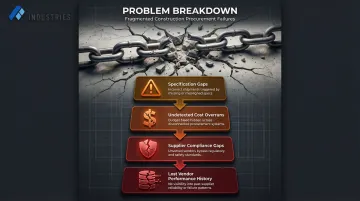
The problem compounds on multi-site or global projects, where scattered vendor records make it impossible to track supplier compliance, performance history, or financial risk in one place. A ProQsmart analysis confirms that disjointed communication and scattered data produce predictable outcomes:
- Specification nuances fall through the cracks, triggering incorrect shipments
- Cost overruns accumulate before anyone connects the dots
- Supplier compliance gaps go undetected until a project audit surfaces them
- Performance history disappears between projects, forcing teams to re-vet known vendors
Manual change order management makes this worse. Scope changes get missed, approvals stall, and disputes arise because nothing connects procurement decisions to live project data.
When a subcontractor submits a change order via email, a project manager approves revised scope in a spreadsheet, and finance tracks the budget impact in an ERP, those three records never reconcile. By the time the discrepancy surfaces, it's typically sitting in legal review.
What AI-Driven Procurement Platforms Actually Do
AI-driven procurement platforms use machine learning, natural language processing, and predictive analytics to automate the full procurement lifecycle: sourcing, vendor onboarding, bid evaluation, contract management, and spend analysis.
These platforms don't just digitize manual tasks. They make decisions based on historical data, real-time signals, and policy rules — decisions that previously required significant human review time.
Vendor Sourcing and Qualification
AI automates vendor onboarding by pulling compliance records, financial data, and performance history into a centralized profile. Instead of procurement teams manually requesting W-9s, certificates of insurance, and compliance documents via email, AI platforms collect and validate these records automatically, flagging missing or expired documents before vendors are approved.
Predictive risk-flagging surfaces unreliable suppliers before they're awarded contracts, not after problems emerge on site. AI analyzes three signal categories to do this:
- Historical performance data: past delivery times, defect rates, dispute history
- Financial stability indicators: credit scores, payment behavior, public filings
- External risk signals: industry news, regulatory actions, market disruptions
This lets procurement teams disqualify risky vendors during evaluation, rather than mid-project.
Bid Evaluation and Tender Management
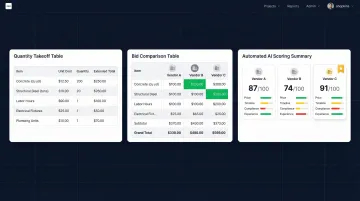
AI-powered bid evaluation replaces manual spreadsheet scoring. Platforms issue RFPs in standardized formats, gather responses digitally, and use NLP to run side-by-side technical and commercial comparisons, flagging anomalies, inconsistencies, and compliance gaps automatically.
According to a 2026 Varseno report, companies implementing AI-powered estimation and bidding systems report a 40-60% reduction in estimation time while simultaneously improving accuracy and reducing costly bid errors. AI systems automatically measure quantities from digital drawings, flag missing line items, and generate comprehensive bid proposals in hours rather than days.
Contract Lifecycle and Change Order Management
Contracts are auto-generated from bid outcomes, with AI screening clauses for hidden risks using NLP and enforcing structured approval workflows. A 2025 peer-reviewed study demonstrated that NLP and ML algorithms achieved 89% accuracy in identifying risk clauses and extracting responsibility information from construction contracts, cutting review time materially and preventing disputes caused by overlooked risks.
Change order modules link scope changes to live financial and schedule data, keeping all stakeholders aligned in real time. When a subcontractor requests a change, the AI platform automatically checks contract terms, validates approvals against policy rules, and updates budget forecasts, so no approval step is skipped or forgotten.
Predictive Analytics and Spend Forecasting
AI synthesizes data from across the procurement function to forecast demand and surface budget risks before they escalate:
- Procurement KPIs and supplier performance scores
- Historical spend patterns by category, vendor, and project
- External signals: supply chain disruptions, commodity price trends
Instead of discovering cost overruns at month-end close, predictive models alert teams weeks in advance, while corrective action is still practical.
Must-Have Features in a Construction AI Procurement Platform
The critical difference between end-to-end platforms and point solutions determines whether AI actually delivers ROI or just creates new integration headaches. End-to-end platforms cover sourcing, vendor management, bid evaluation, contract management, and analytics in one unified system. Point solutions address only one stage—forcing teams to manage data handoffs manually, reintroducing the inefficiencies AI was supposed to eliminate.
When vendor onboarding happens in one system, bid evaluation in another, and contract management in a third, procurement teams spend more time exporting CSVs and reconciling data than they save through automation. End-to-end platforms maintain workflow continuity from vendor submission through ongoing performance management without manual handoffs.
Real-Time Analytics and Spend Visibility
Real-time analytics dashboards need to serve every stakeholder, not just the procurement team. Core capabilities should include:
- Spend visibility by project or category
- Supplier performance scores
- Compliance status tracking
- Forecast vs. actual budget reporting
- Risk alerts for executives before problems escalate
Project managers need delivery timeline visibility, finance needs live budget tracking, and both require data that reflects the current state of the project — not last week's export.
According to a 2024 PwC Global Digital Procurement Survey, 94% of organizations now use Source-to-Pay (S2P) solutions, with spend analytics, e-sourcing, contract lifecycle management, and supplier risk management as must-have features.
Integration with BIM, ERP, and Project Management Tools
The platform should connect with BIM tools for accurate takeoff data, ERP systems for financial reconciliation, and project management software so that procurement decisions are grounded in live execution data rather than static plans. A Construction Industry Institute study found that 71% of organizations use integrated materials management systems combining commercial software with ERP—allowing materials managers to streamline data flow from 3D design directly into procurement workflows.
Without integration, procurement operates in a vacuum—ordering materials based on outdated plans while the project team works from revised drawings, creating costly mismatches between what's ordered and what's needed on site.
Compliance Automation and Audit Trails
Construction procurement carries specific compliance obligations that manual processes struggle to track consistently. A capable platform should automate:
- Vendor qualification checks against prequalification criteria
- Traceable bid decision logs for dispute resolution
- Contract approval workflows with timestamped records
- Regulatory reminders tied to project type and jurisdiction
For sustainability commitments, ISO 20400:2017 provides guidelines for embedding social responsibility and environmental criteria into purchasing decisions. For federal contractors, the AGC highlights mandatory CMMC framework requirements, which require rigorous cybersecurity controls to protect Controlled Unclassified Information across the entire supply chain.
Human Oversight and Outcome Accountability
Compliance controls reduce risk exposure, but they only work if humans remain accountable for reviewing flagged decisions rather than rubber-stamping automated outputs. Platforms that combine automation with structured human review checkpoints — and hold themselves accountable through SLAs rather than just software delivery — are more reliable in practice than tools that automate tasks while leaving teams responsible for the results. This is the core advantage of an orchestration model over a point solution stack.
Assembly Industries takes this approach directly: AI agents handle high-volume procurement tasks while expert-vetted human oversight covers exception management and quality review. Contracts are structured around business outcomes rather than software licenses, meaning the platform's success is measured by what procurement actually delivers — cycle time, cost savings, compliance rates — not just whether the software is running.
The Business Case: Measurable Outcomes from AI Procurement
Cycle Time Reduction
AI-driven sourcing and tender management completes significantly faster than manual methods. As noted earlier, companies report 40-60% reductions in estimation and bid preparation time, allowing procurement engineers to focus on strategic negotiation rather than data entry.
Procurement Cost Savings
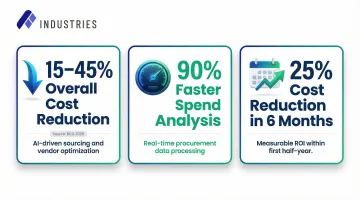
AI-powered benchmarking and spend analytics deliver substantial cost reductions. A 2025 Boston Consulting Group report and a 2026 BusinessPlusAI case study point to consistent gains across categories:
- 15-45% overall cost reduction across procurement categories (BCG, 2025)
- 90% faster spend analysis versus manual methods
- 25% cost reduction within six months after deploying AI spend analytics and automated PO processing
Supplier Performance Improvement
AI supplier evaluation improves supplier performance scores and reduces the risk of on-site failures. When vendor selection is driven by historical performance data and predictive risk analysis rather than relationships or lowest bid alone, project outcomes improve measurably. A 2026 systematic literature review confirms that AI improves supply chain performance by 49%, amplifies resilience by 66%, and achieves 85% accuracy in supply chain risk detection.
Eliminating Maverick Spend
AI procurement platforms eliminate maverick spend by enforcing policy-based approval routing, restricting purchasing to qualified suppliers, and making all spend visible in real time. According to Kodiak Hub citing The Hackett Group, companies lose 10-20% of targeted savings to unauthorized purchases each year.
Implementing a purchase-to-pay platform with automated controls results in a 60% lower lost savings rate compared to firms without such tools — a gap that compounds quickly across distributed site teams running multiple concurrent projects.
How to Choose and Implement the Right Platform
Key Evaluation Criteria
When evaluating platforms, assess:
- AI depth: Look for true machine learning and predictive analytics, not just digitized workflows
- Construction-specific coverage: Change orders, subcontractor management, and BIM integration should come standard
- Security standards: SOC 2 compliance covers security, availability, processing integrity, confidentiality, and privacy
- Vendor accountability: Outcome-based SLAs hold vendors to results, not just uptime
- Total cost of ownership: Factor in implementation and training — not just the license fee
Phased Implementation Approach
Start with foundational capabilities — vendor onboarding, digital bid management, and spend visibility — before scaling to predictive analytics and autonomous sourcing. A 2025 Forrester Total Economic Impact study found that successful enterprise deployments prioritized higher-ROI modules first (vendor master data management, accounts payable, sourcing) to generate early wins. Start where the pain is greatest, demonstrate value quickly, then expand.
Change Management Essentials
According to MIT research cited by Art of Procurement, 95% of enterprise AI pilots deliver no measurable ROI — not because the technology fails, but because "adoption is high, transformation is low." Getting rollout right means addressing the people side as seriously as the technology side.
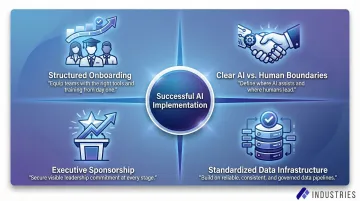
Successful implementations typically share four characteristics:
- Structured onboarding tailored to each team's role in the procurement process
- Clear boundaries defining what AI handles versus what humans review and approve
- Executive sponsorship to drive consistent adoption across distributed project teams
- Standardized data infrastructure so AI models have reliable information to work from
AI Procurement Trends Shaping Construction in 2026
Autonomous Sourcing Agents
The industry is shifting from predictive AI to "Agentic AI"—systems that independently manage RFP issuance, evaluate supplier responses, and execute machine-to-machine transactions. A 2025 Gartner strategic prediction forecasts that by 2028, 90% of B2B buying will be AI agent-intermediated, pushing over $15 trillion of B2B spend through AI agent exchanges. This means procurement teams will shrink in size but grow in strategic importance, focusing on policy definition and exception handling rather than routine transaction processing.
Transforming Indirect Procurement
That shift toward agent-driven buying is hitting indirect procurement hard. By 2026, AI is bringing new levels of visibility to historically fragmented construction categories that were once nearly impossible to govern:
- Temporary labor and staffing
- Equipment rentals
- Consumables and site supplies
- On-site services and subcontracted work
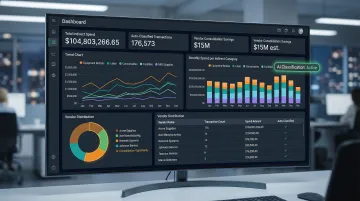
AI-driven intake automation and spend analytics now deliver the same control over indirect spend that was previously only possible for direct materials. AI-powered spend analytics tools automatically classify transactions from free-text descriptions and invoice data—allowing firms to consolidate vendors and negotiate better terms across spend categories that once went completely unmanaged.
Frequently Asked Questions
How can AI improve the procurement process?
AI improves procurement by automating repetitive tasks like vendor qualification, bid scoring, and contract review, enabling data-driven supplier selection, and providing real-time spend visibility. This cuts cycle times by 40-60%, reduces errors, and frees procurement teams to focus on strategic decisions rather than manual data entry.
What is the best AI platform for procurement in the construction industry?
The best platform depends on company size and use case. Construction-specific platforms should offer integrated bid management, vendor performance tracking, contract lifecycle management, and change order automation. Prioritize BIM and ERP integration, SOC 2 compliance, and outcome-based accountability over point-solution functionality.
How can AI-driven procurement platforms eliminate maverick spend?
AI platforms eliminate maverick spend by enforcing policy-based approval routing, restricting purchasing to pre-approved vendor lists, and making all spend visible in real time. Unauthorized purchases are flagged or blocked before they create budget overruns, reducing lost savings from maverick buying by up to 60%.
How will AI transform indirect procurement by 2026?
By 2026, AI will extend the automation gains seen in direct procurement into indirect categories. Intelligent intake, automated sourcing for low-value purchases, and predictive analytics will govern temporary labor, equipment rentals, and consumables that have historically resisted centralized control.
What are the 5 R's of procurement?
The 5 R's of procurement are the right quality, right quantity, right time, right source, and right price. AI procurement platforms optimize all five at once—automatically balancing cost, quality, and timing trade-offs that manual processes force teams to negotiate by hand.