Introduction
76% of the average CPO's time is consumed by operational and transactional activities — data entry, invoice chasing, purchase order processing — yet the same teams are expected to drive supplier strategy, manage risk, and shape spend decisions. According to Deloitte's Global Chief Procurement Officer Survey, this misallocation of talent stifles value creation and prevents teams from addressing strategic mandates like supply chain resilience and inflation mitigation.
Robotic Process Automation (RPA) breaks this cycle by absorbing the rules-based, repetitive work that consumes procurement capacity. When bots handle transactional volume, teams redirect hours toward strategic sourcing, supplier relationship management, and proactive risk mitigation.
This article covers what RPA is and why adoption is accelerating, which tasks it should own, the specific strategic capabilities it unlocks, and what it takes to implement it effectively.
Key Takeaways
- RPA automates high-volume, rules-based procurement tasks like PO creation, invoice matching, and supplier onboarding
- Procurement teams recover time to focus on supplier strategy, category management, and risk mitigation
- Combining RPA with AI agents and human oversight delivers the strongest results for complex workflows
- Implementation succeeds when teams map processes, secure cross-functional buy-in, and measure against strategic outcomes
What Is RPA in Procurement, and Why Is It Gaining Ground Now?
RPA is software that mimics human actions across digital systems—logging in, extracting data, filling forms, triggering workflows—without requiring changes to underlying infrastructure. RPA operates on top of existing ERP and procurement platforms, which is why adoption is relatively low-friction compared to full system replacements.
The urgency to adopt these technologies is mounting. The global RPA market was valued at $4.68 billion in 2025 and is projected to reach $35.84 billion by 2033, representing a 29.0% compound annual growth rate. Within procurement specifically, The Hackett Group reports that AI and automation deployment nearly doubled year-over-year, with 43% of organizations actively pursuing deployment.
CPOs face mounting pressure to demonstrate business value beyond cost reduction while dealing with leaner teams, more complex supply chains, and greater compliance requirements. Deloitte's CPO survey highlights that 89% of procurement leaders face high or moderate impact from cost/spend risk, while 79% battle supply shortages. The data makes clear why automation has moved to the top of every CPO's agenda.
Understanding the Automation Spectrum
Not all automation is created equal. Two distinct tiers define what's possible:
Rule-Based RPA: Handles high-volume, repetitive tasks by sitting on top of legacy systems — copying data between platforms, verifying structured requisition fields, or routing approvals based on fixed rules.
Intelligent/Cognitive Automation: Combines structured logic with AI to process unstructured documents, anticipate exceptions, and make probability-based decisions — bridging the gap between rule execution and human judgment.
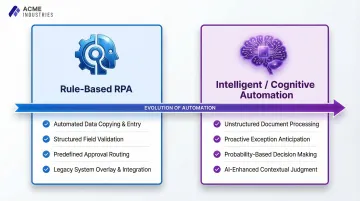
Most procurement teams enter at the rule-based tier and expand into cognitive automation as they identify higher-value processes to automate.
The Procurement Tasks That RPA Should Own
Not every task is a good RPA candidate. The strongest candidates are high-volume, rules-based, and involve moving data between systems with little need for human judgment. Apply this qualifying test: if the task follows a predictable decision tree and occurs frequently, RPA can likely own it.
Procure-to-Pay Automation
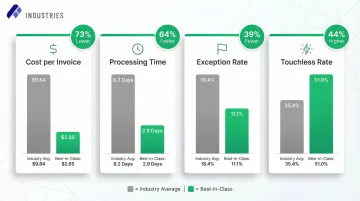
Automating the Procure-to-Pay (P2P) cycle delivers one of the highest ROIs in procurement. The performance gap between manual and automated operations is significant:
| Metric | Industry Average | Best-in-Class | Improvement |
|---|---|---|---|
| Cost per Invoice | $9.84 | $2.65 | 73% lower |
| Processing Time | 8.2 days | 2.9 days | 64% faster |
| Exception Rate | 18.4% | 11.1% | 39% fewer |
| Touchless Rate | 35.4% | 51.0% | 44% higher |
Source: Ardent Partners' 2025 State of ePayables report
RPA handles the P2P pipeline by receiving purchase requisitions, validating them against pre-set rules, generating purchase orders, and routing them for approval—all without manual intervention. Research indicates that companies implementing intelligent PO automation reduce processing time by 70-80% while improving accuracy rates by 60-70%.
Three-way invoice matching is particularly high-impact. RPA cross-references the purchase order, goods receipt, and supplier invoice, flags discrepancies for human review, and processes compliant invoices automatically. A Forrester Total Economic Impact study found that automating PO and non-PO invoice matching increased AP clerk productivity by 50%, contributing to an overall project ROI of 158%. Organizations target a first-pass match rate of 90%+ for PO-backed invoices to maximize these returns.
Supplier Data and Onboarding
Manual supplier onboarding relies on fragmented emails and spreadsheets, creating severe bottlenecks and compliance blind spots. RPA automates supplier onboarding workflows—collecting registration documents, running compliance checks, populating vendor master data in ERP systems, and triggering approval sequences.
In a documented case study, a global manufacturing leader replaced manual onboarding with a centralized, automated portal. The measured outcomes:
- Cycle time dropped from 50 days to just 8 days
- Duplicate invoice rate fell by 87% (from 1.6% to 0.2%)
- Fraudulent payment incidents were completely eliminated
By automating repetitive compliance checks and data entry, procurement teams shift their focus from chasing tax forms and banking validations to strategic supplier performance management.
Contract and Spend Data Management
When procurement data is fragmented across manual systems, a significant portion of enterprise spend goes unmanaged. According to Ardent Partners, the average procurement team manages only 70.8% of total enterprise spend, leaving nearly 29% unmanaged. This represents a substantial missed opportunity—every additional dollar brought under procurement management yields savings of 6% to 12% during the initial contract period.
RPA addresses this directly by handling the data work that keeps spend visible and contracts current:
- Extracts and consolidates spend data from disparate ERP and procurement systems
- Populates spend cubes for category-level analysis
- Monitors contract databases for renewal dates and termination windows
- Triggers alerts before missed deadlines create exposure
Poor contract visibility carries a real cost—estimates put maverick spend, missed renewals, and unexercised termination windows at billions in avoidable losses annually across large enterprises. Clean, timely data is the foundation for the strategic analysis procurement teams want to be doing but rarely have bandwidth for.
How RPA Creates Space for Strategic Procurement
RPA's real impact on procurement is a reallocation of human capacity. When bots absorb transactional volume, procurement professionals gain back hours that can be directed toward work that requires relationship skills, commercial judgment, and market knowledge.
Deloitte's research shows that high-performing procurement organizations spend approximately 15% less time on transactional activities and allocate more than 50% of their time to strategic activities. This shift in capacity directly correlates with superior enterprise outcomes.
Strategic Sourcing and Supplier Relationships
With data aggregation and routine supplier communications automated, category managers can spend more time on market analysis, competitive sourcing events, and building strategic supplier partnerships. Clean, real-time spend data fed into category reviews makes sourcing decisions faster and better-informed.
The Hackett Group found that Digital World Class procurement teams operate with 32% fewer full-time equivalents but achieve 2.6X higher ROI. McKinsey notes that shifting transactional work to automation can make the procurement function 25% to 40% more efficient. One power generation OEM achieved 11% cost savings in 12 months simply by setting up a strategic sourcing organization focused on value-driven work.
Risk Monitoring and Compliance
RPA enables continuous compliance monitoring—automatically checking supplier certifications, flagging contract deviations, and producing audit trails—turning what was a periodic, labor-intensive review into an always-on process. This matters strategically: procurement teams that can demonstrate proactive risk management elevate their standing as a business partner rather than a back-office function.
When compliance checks run continuously rather than quarterly, procurement catches issues before they escalate. That kind of proactive governance changes how the C-suite views procurement's value contribution.
Forecasting and Demand Planning
Automated data collection across inventory levels, consumption patterns, and supplier lead times gives procurement the inputs needed for more accurate demand forecasting. When these feeds are automated, procurement can shift from reactive purchasing to proactive supply positioning, a meaningful strategic upgrade.
Taken together, these capabilities do more than improve efficiency—they change procurement's seat at the table. Teams that control spend intelligence, risk visibility, and supply positioning are equipped to shape business outcomes, not just execute them.
Moving Beyond RPA: Intelligent Automation in Procurement
Standalone RPA handles structured, rule-based tasks well, but procurement increasingly involves unstructured data—supplier emails, contract language, market intelligence—and decisions that require contextual judgment. This is where RPA alone hits its limits.
Intelligent automation combines RPA with AI agents that can interpret unstructured data, identify patterns in spend or supplier behavior, and support more complex decisions like dynamic sourcing or supplier risk scoring.
The most effective enterprise procurement automation today follows an orchestration model:
- RPA handles data movement and rules-based processing
- AI agents handle pattern recognition and decision support
- Human experts handle relationship management, negotiation, and exception resolution
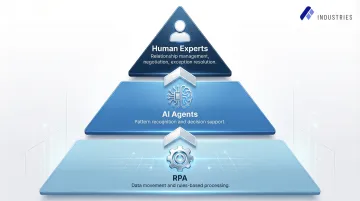
This orchestration model delivers both efficiency and strategic quality simultaneously. When RPA is augmented with Machine Learning and Natural Language Processing, procurement gains entirely new capabilities:
Dynamic Sourcing — A chemicals company piloting AI agents automated tender preparation, supplier prequalification, and bid analysis. The result: 20% to 30% efficiency gains for procurement staff and 1% to 3% improvement in value capture.
Unstructured Invoice Processing — Combining RPA with AI-driven OCR eliminates the need for predefined templates. One firm reached a 70% automation rate, cutting invoice processing time from 15 days to 2-3 hours.
Supplier Negotiations — A telco used AI agents to support price negotiations across long-tail spend. The AI evaluated trade-offs and generated counteroffers, cutting analysis time by 90% and delivering 10% to 15% savings across vendors.
The Assembly Industries Approach
Assembly Industries applies this orchestration model in practice — pairing AI agents with expert human oversight on SOC2-compliant infrastructure. Procurement teams automate end-to-end workflows rather than isolated tasks, with full accountability for outcomes at each step.
Intelligent automation also reframes how procurement success gets measured. Cycle-time reduction and error rates still matter, but the metrics that move the needle for CFOs and business stakeholders are supplier performance improvement, spend under management, and sourcing savings — the outcomes that signal real strategic contribution.
Getting RPA Implementation Right
Foundation: Process Mapping and Business Case
Start by mapping the full procure-to-pay process and identifying high-volume, rules-based tasks with clear ROI potential. Build the business case using baseline data on processing times, error rates, and labor costs. Establish cross-functional sponsorship from procurement, IT, finance, and HR before any bots are built.
Skipping the process-mapping step is the most common reason RPA projects underperform. Research shows that more than 50% of RPA projects fail to grow beyond 10 bots because organizations attempt to automate broken, manual processes without redesigning them first. Deloitte identifies the top barriers to end-to-end automation as difficulties in integrating various solutions (62%), lack of skills and experience (55%), and inability to change business processes (52%).
Change Management: Non-Negotiable
Bots absorb the repetitive work that consumes procurement professionals' time — they don't replace the people doing it. Frame the communication strategy around what staff will gain—time for higher-value work, clearer career development toward strategic capabilities—rather than what the bots replace.
Upskilling the team alongside deployment accelerates adoption. Deloitte's 2025 CPO Survey finds that "Digital Masters"—organizations investing in both digital transformation and upskilling—deploy GenAI at twice the rate of their peers and realize a 3.2x investment return.
Governance and Compliance
RPA bots in procurement must operate within existing controls from day one. Core requirements include:
- Adherence to approval matrices and segregation-of-duties policies
- Comprehensive audit trails for every automated transaction
- Defined exception-handling protocols with clear escalation paths
- Compliance logging and access controls meeting regulated-industry standards
KPMG's 2025 SOX Survey highlights the stakes: while in-scope systems have doubled on average, automated controls account for just 17% of total controls, with 45% remaining entirely manual. Embedding compliance into the RPA architecture directly closes that gap — reducing audit risk while freeing procurement from manual control monitoring.
Measuring Success
Track standardized metrics to ensure RPA programs deliver value:
- Touchless Processing Rate: Percentage of invoices or POs handled without human intervention (Best-in-class: 51.0%)
- PO Cycle Time: Days elapsed from requisition to PO issuance (Best-in-class: 4-6 days)
- Cost Per Invoice: All-inclusive cost to process a single invoice (Best-in-class: $2.65)
- Invoice Exception Rate: Percentage of invoices flagged for errors (Best-in-class: 11.1%)
Frequently Asked Questions
What is RPA in procurement?
RPA is software robots that automate repetitive, rules-based procurement tasks—such as PO creation, invoice matching, and supplier data management—operating on top of existing systems to reduce manual effort and errors.
How does robotic process automation support procurement?
RPA supports procurement by handling high-volume transactional work so teams can shift focus toward strategic activities like sourcing, supplier relationship management, and risk monitoring.
What are examples of RPA use cases in procurement?
Common examples include purchase order generation, three-way invoice matching, supplier onboarding, spend data consolidation, contract date monitoring, and inventory level alerts.
Which parts of an employee's role should be automated with RPA?
RPA is best suited for tasks that are high-volume, follow predictable rules, and require moving or verifying data across systems. Judgment-heavy work like negotiations, supplier strategy, and exception management should stay with humans.
What are the 4 stages of process automation?
The four stages are task automation (basic RPA), process automation (end-to-end workflow bots), intelligent automation (AI-enhanced decision support), and autonomous operations (self-optimizing systems). Most procurement teams today operate at stages one or two.
What are the 5 R's of procurement?
The 5 R's are right quality, right quantity, right time, right source, and right price. RPA supports each by keeping data accurate, processing transactions on time, and applying sourcing rules consistently across workflows.